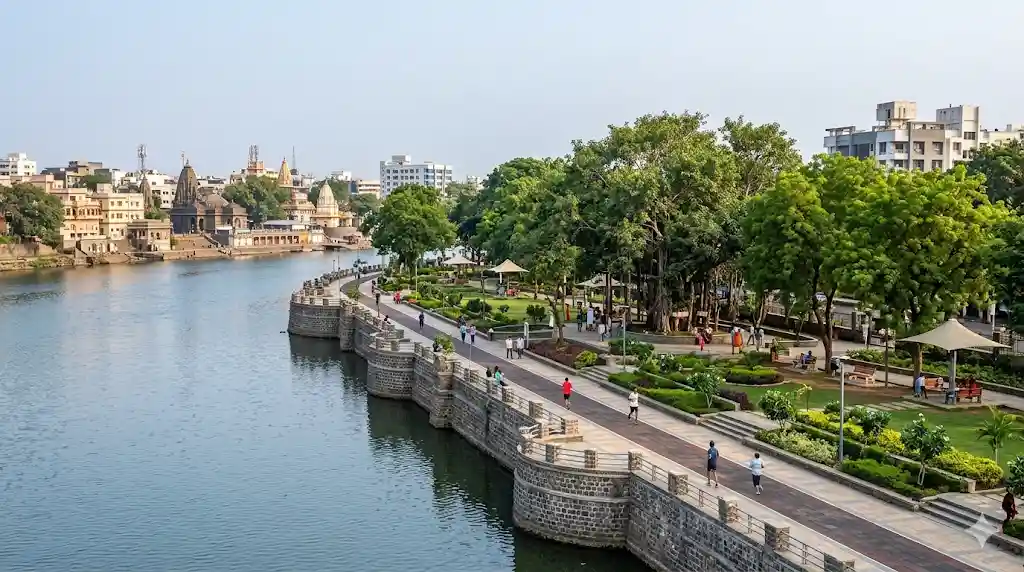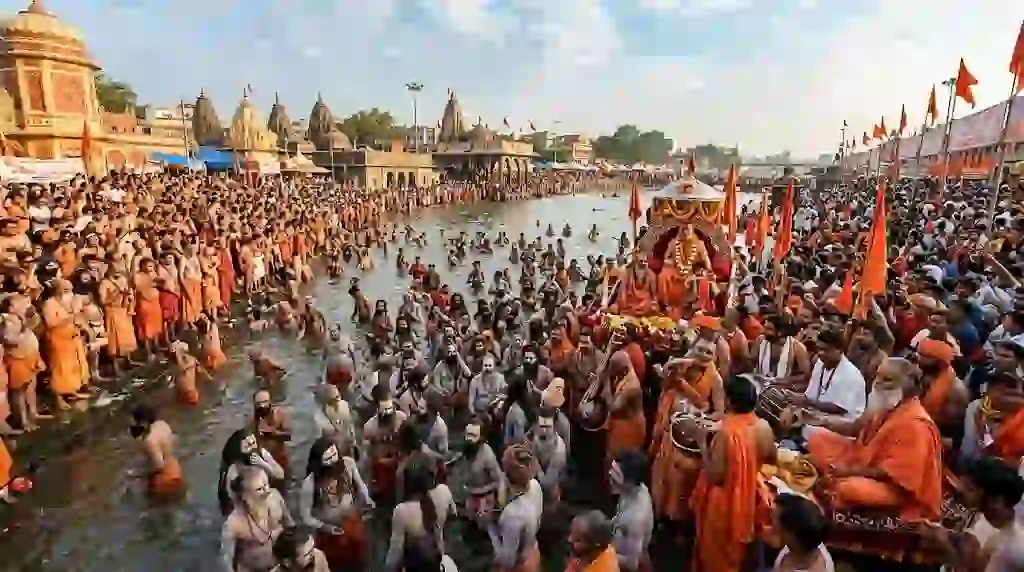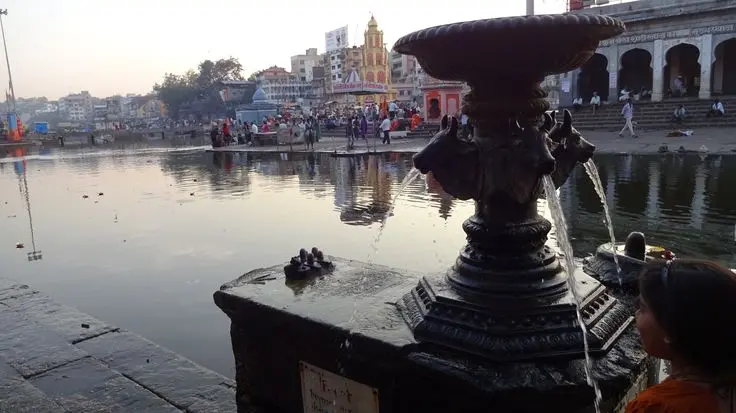
The Godavari River, often referred to as the **'Dakshin Ganga'** (Ganges of the South), is the lifeblood of Nashik. Its spiritual significance reaches its zenith during the Simhastha Kumbh Mela. For centuries, sages, saints, and householders have gathered on its banks, believing that its sacred waters hold the power to liberate the soul.
1. The Origin: Dakshin Ganga and Sage Gautama
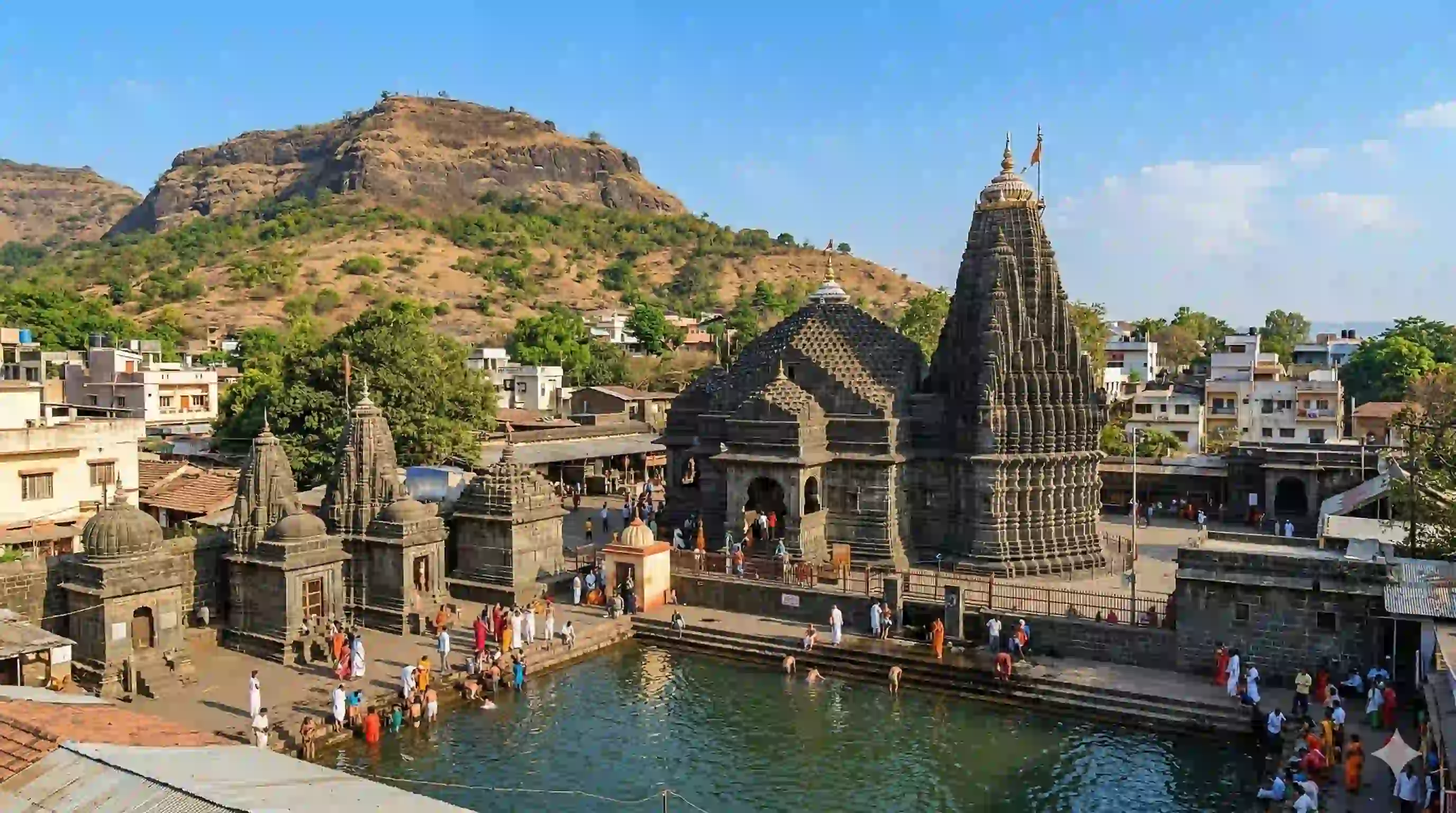
According to ancient Puranas, the Godavari was brought to earth by **Sage Gautama**. It is said that to cleanse the sin of unintentionally killing a cow, the sage performed intense penance to Lord Shiva at Brahmagiri Hill in Trimbakeshwar.
Pleased by his devotion, Lord Shiva released a stream of the celestial Ganga from his locks, which became the Godavari. For a pilgrim, bathing in the Godavari is not just a physical act but a tribute to the penance of Sage Gautama and the mercy of Lord Shiva.
2. The Legend of the Amrit Drops
The spiritual foundation of the Kumbh Mela lies in the **Samudra Manthan** (Churning of the Ocean). Mythology tells us that during a celestial struggle between Devas and Asuras, four drops of the Nectar of Immortality (Amrit) fell on earth.
One of these drops fell at **Ramkund** in Nashik, on the banks of the Godavari. It is believed that during the Simhastha period, the river water turns into nectar. A dip during the Shahi Snan dates is said to cleanse seven generations of sins and grant *Moksha* (liberation from the cycle of birth and death).
3. Ramkund: The Sacred Epicenter
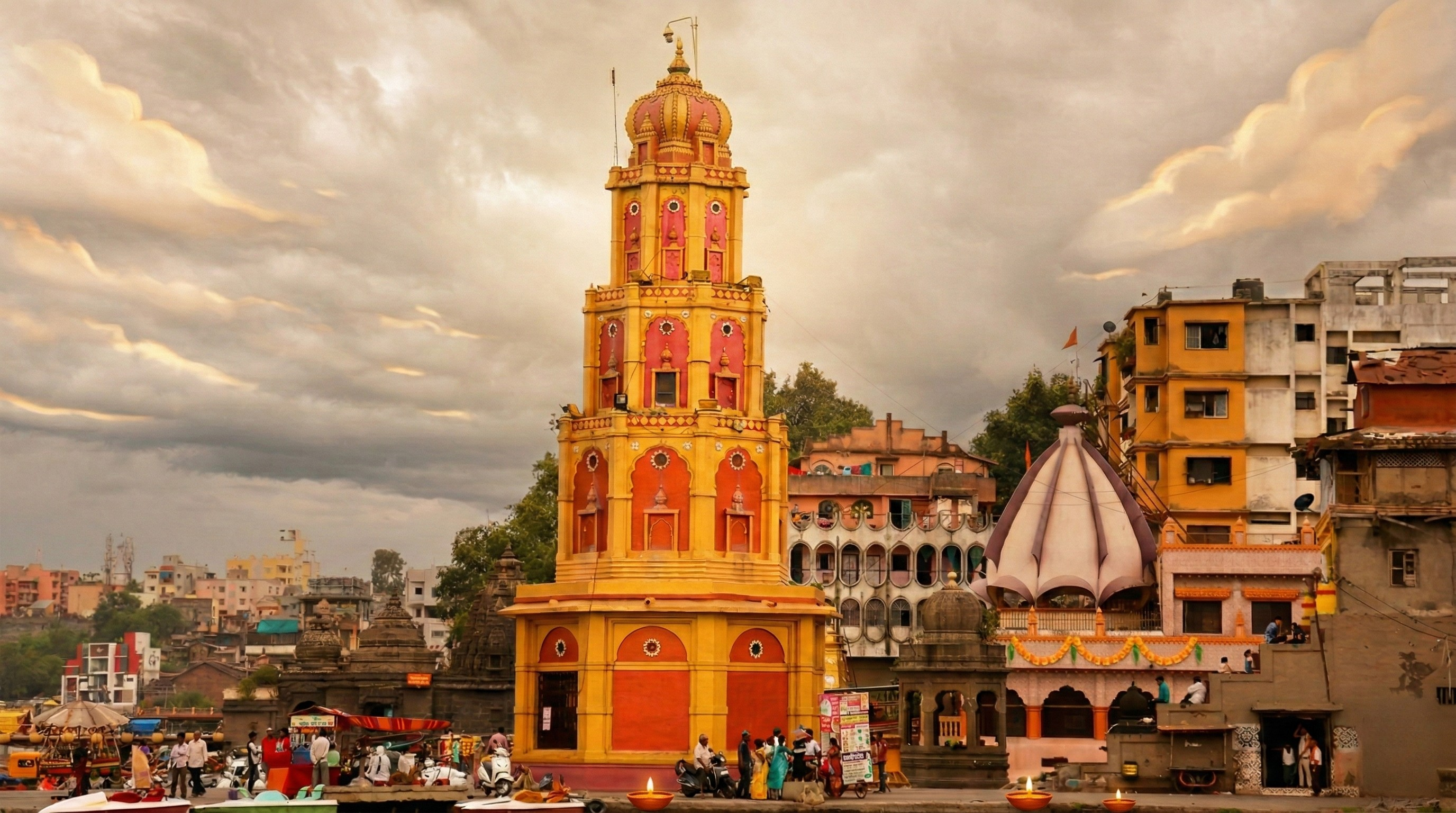
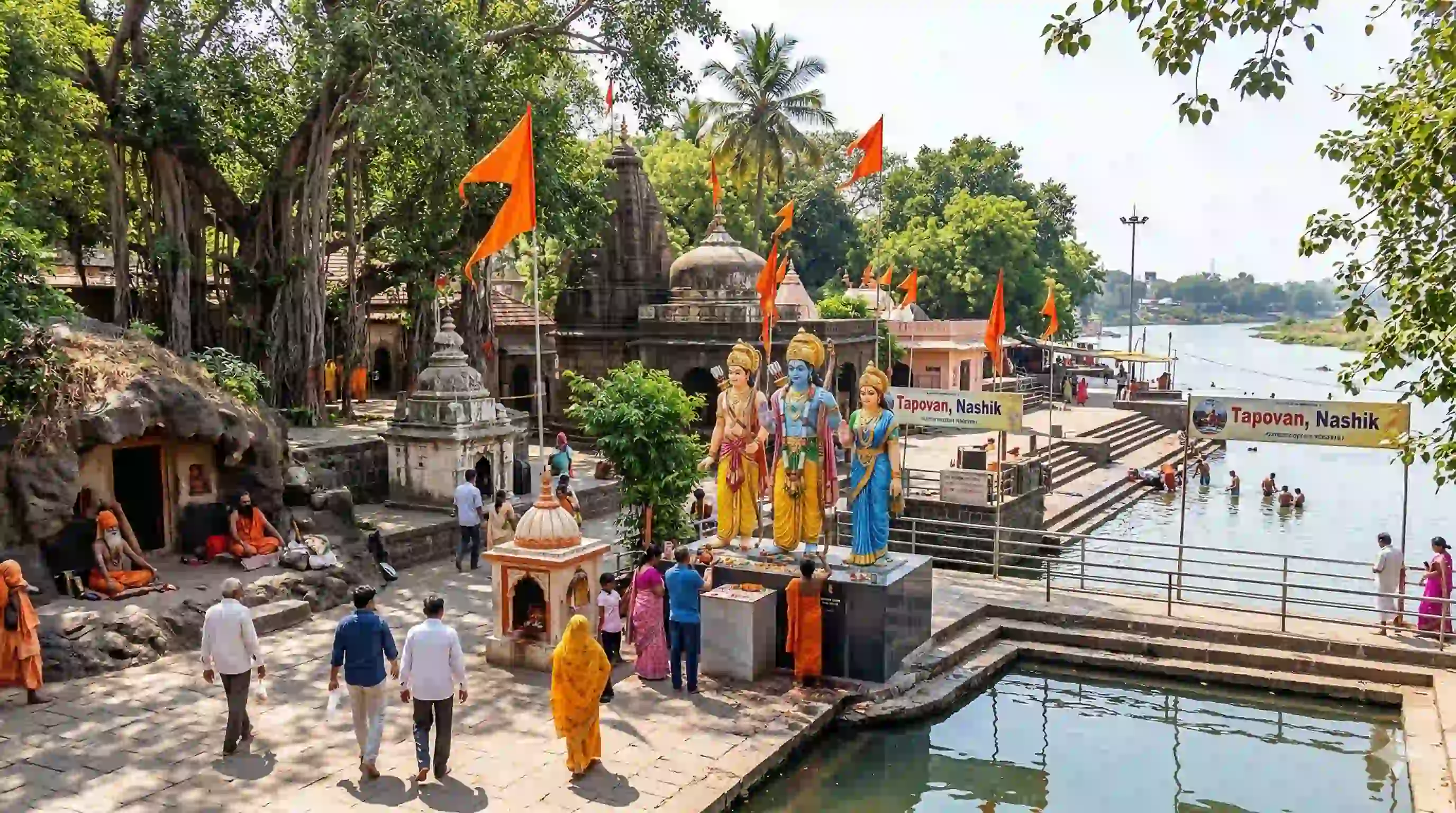
In Nashik, the Godavari is most sacred at **Ramkund**. It is named after Lord Rama, who is believed to have taken daily baths here during his 14-year exile (Vanvas).
First-time visitors often notice that bones (ashes) immersed in Ramkund dissolve completely in the water, a phenomenon that devotees believe proves the river's divine energy. For any seeker, standing at Ramkund during the Kumbh Mela is like being at the center of the spiritual universe.
4. The Connection with Planet Jupiter (Guru)
The Nashik Kumbh Mela is unique because it is linked to the planet **Jupiter (Guru)** entering the zodiac sign of **Leo (Simha)**. This alignment happens once every 12 years and is considered a highly charged astrological window.
Spiritual leaders explain that during this time, the Godavari’s waters absorb cosmic energy, making it the most powerful place for meditation and holy dipping. To plan your visit during these charged dates, explore our Travel Packages for a guided spiritual experience.
5. Rituals Beyond the Bath
The Godavari isn't just about the Shahi Snan. Throughout the Kumbh, the river banks witness **Deep Daan** (offering lamps), **Pitri Tarpan** (rituals for ancestors), and grand **Ganga Aarti** in the evenings. The sight of thousands of flickering lamps floating on the dark waters of the Godavari is a meditative experience that stays with a pilgrim forever.
6. A Call for Preservation
As we celebrate the spiritual glory of Mother Godavari, it is also our duty to keep her clean. As pilgrims, we must ensure that our rituals do not pollute the very source of our spiritual life. The local administration and various NGOs work tirelessly during the Kumbh to maintain the river’s purity, and every visitor's cooperation is vital.
Conclusion: The Godavari is more than just a river; she is a mother, a goddess, and a path to the divine. Whether you are a first-time visitor or a seasoned pilgrim, the Godavari during Kumbh Mela offers a chance for a deep spiritual reset. **Jai Gange! Jai Godavari!**